
Wardrobe Design That Still Works in Five Years
· 5 min read
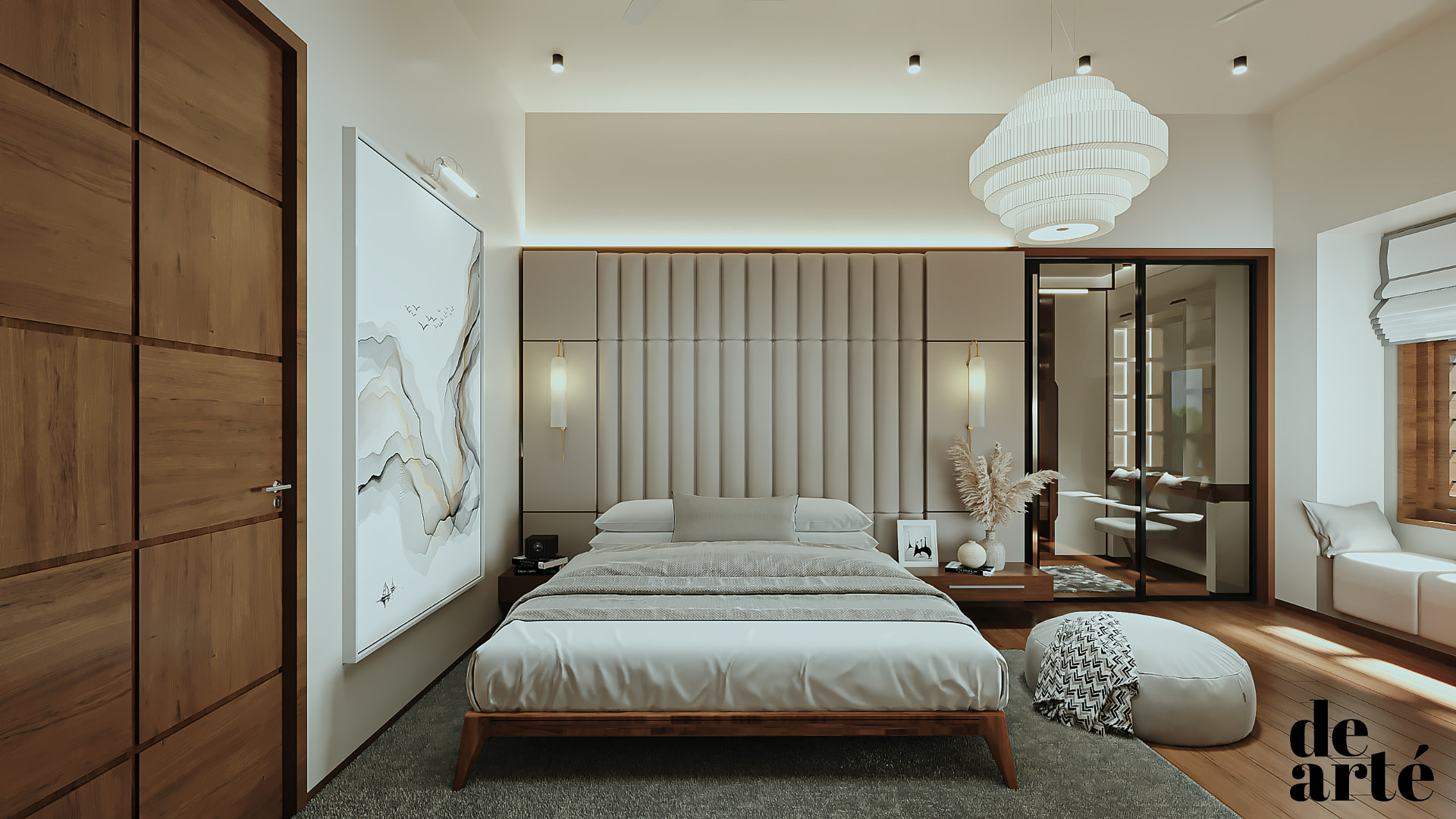
Most wardrobe complaints are not about looks. They are about a hanging section too short for sarees, a drawer that cannot take folded denim, and a loft nobody can reach. Internal planning deserves more time than the shutter finish, and it usually gets less.
Start by counting what goes in. Long hanging for sarees and coats, short hanging doubled up for shirts, drawers at waist height for daily items, and open shelves for what you actually reach for every morning. A wardrobe planned around your real inventory almost always needs fewer shelves and more hanging than the standard template.
Sliding shutters save the swing space in tight bedrooms but cost you a third of the visible opening and cannot take internal mirrors easily. Hinged shutters give full access and cheaper hardware. In rooms under 11 feet wide, sliding usually wins; above that, hinged is the better long-term choice.
Loft storage is worth building only if it is reachable. We keep loft height under 24 inches, use lift-up shutters rather than side-hung, and reserve it for luggage and seasonal bedding — not for things you need twice a month.
Finally, light the inside. A slim profile light behind the shutter line costs very little and changes how the wardrobe feels every single day, especially in bedrooms where the main light sits behind you.
Planning your own interior?
Talk to our Expert in Trivandrum Office for a free measurement visit and a line-by-line estimate.